 跳到内容
跳到内容 
A Guide to YD Series Multi Motors for Variable Speed Industrial Applications
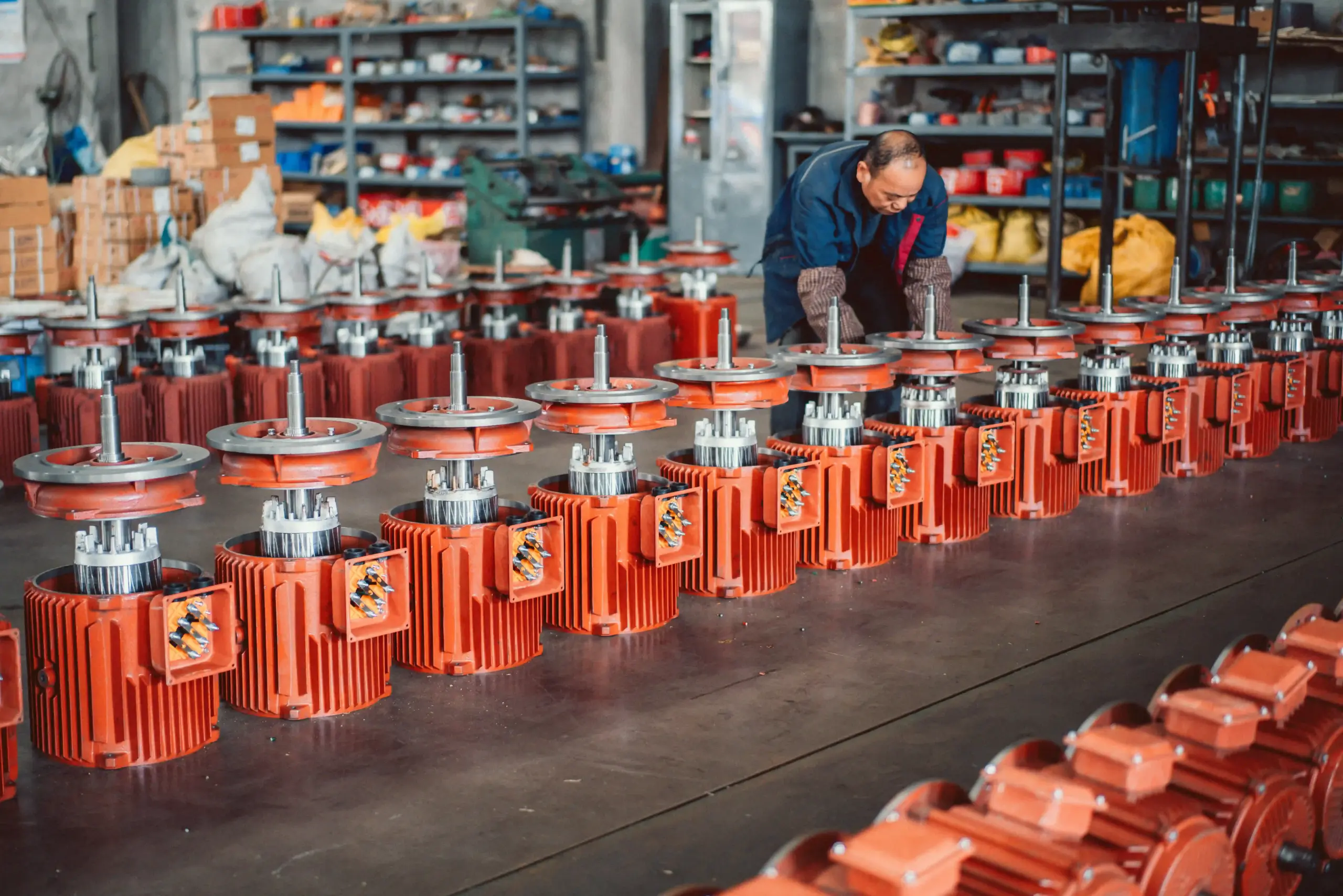
Summary answer: The YD Series multi motor is a pole-changing, multi-speed three-phase asynchronous motor that provides approximately 3–4 stable speed levels for machine tools, cranes, and hoists without requiring a variable frequency drive. As part of JWMotor’s YD Series Three-Phase Asynchronous Motors offering, it is designed for mechanical reliability, EMC-friendly control, and cost-effective CAPEX in plants across Johannesburg, South Africa | Windhoek, Namibia | Gaborone, Botswana and other industrial regions.
What Is a YD Series Multi Motor and Where Is It Used?
A YD Series multi motor is a specialized three-phase asynchronous motor that utilizes pole-changing speed control technology. By altering the winding connections within the stator, operators can change the number of magnetic poles and therefore adjust the synchronous speed in fixed steps.
From a practical factory floor perspective, these motors are frequently deployed where equipment needs distinct operating speeds but not continuous, stepless control. Typical applications of the YD Series Three-Phase Asynchronous Motors from JWMotor include:
- Machine-tools (lathe motor, drill motor, milling machine motor, planers, shapers)
- Material handling equipment (crane motor, hoist motor, winches)
- Pressers, saws, boring machines, gear-cutting machines, shears, slotters, broaches
- Ventilation or blowers that benefit from straightforward multi speed blower motor wiring
Application recommendations are for reference only; users should consult a qualified technician or JWMotor’s technical team for specific use cases. All performance data mentioned are derived from internal testing in controlled conditions and are intended as a guide rather than a universal guarantee.
How Pole-Changing Multi-Speed Technology Works in YD Series Three-Phase Motors
The YD Series three-phase induction motor relies on the relationship between synchronous speed, supply frequency, and the number of poles. By switching the internal winding configuration (such as Dahlander-type connections), the motor changes its pole count and therefore its speed.
| Motor Speed Setting | Typical Pole Count | Approximate Synchronous Speed (at 50 Hz) | Common Application Use Case |
|---|---|---|---|
| High Speed | 2 Poles | Up to 3000 RPM | Rapid traverse, fast drilling |
| Medium Speed | 4 Poles | Up to 1500 RPM | Standard cutting, general milling |
| Low Speed | 6 Poles | Up to 1000 RPM | Heavy load lifting, threading |
| Ultra-Low Speed | 8 Poles | Up to 750 RPM | Precision positioning, crane creeping |
These values are typical synchronous speeds; actual shaft speed will be lower due to slip and may vary with load, ambient temperature, and power supply stability. Technical parameters are subject to improvement and change without prior notice.
Key Benefits of YD Series Multi Motors for Machine Tools, Cranes, and Hoists
When evaluating options for an adjustable rpm motor, the YD Series multi motor provides a practical alternative to pairing a standard industrial induction motor with a VFD:
- Mechanical Reliability and Stiff Characteristic: The pole-changing design supports robust torque at each designated speed, which is useful for crane and hoist motor duties or heavy cutting on machine-tools.
- EMC-Friendly Operation: Without high-frequency switching from a variable frequency drive, the system generally emits less electromagnetic interference, which may be beneficial in plants with sensitive control electronics.
- Cost-Effective CAPEX: A multi-speed motor with contactor-based control can offer more economical upfront investment than a full variable frequency motor setup in applications with a limited number of speed points.
- Simplified Control: Control logic is based on well-understood contactor schemes instead of complex digital parameter settings, which can help maintenance teams in industrial environments.
For context, JWMotor also supplies other series such as the Y2 Series (IE2) three-phase asynchronous motor, which offers cost-effective CAPEX optimization, simplified maintenance, rugged cast iron housing, and global interchangeability for pumps, fans, compressors, and conveyors. This helps OEMs standardize across different drive concepts where appropriate.
To see how these lines are manufactured, you can review the JWMotor industrial motor manufacturing capabilities.
How JWMotor Engineers a Durable YD Series Multi Motor for Harsh Industrial Environments
Producing a durable AC electric motor for lathes, cranes, and hoists requires careful material and component selection. JWMotor’s YD Series multi motors are engineered with the following practices and components:
- Conductive Materials: Use of Enameled Copper Wire and Oxygen-Free Copper in the windings to support efficient current flow and reduced thermal losses under rated conditions.
- High-Grade Core Steel: Motor cores made with Baosteel Silicon Steel (electrical silicon steel) help improve energy conversion efficiency by approximately 5–8% compared with many standard materials, based on JWMotor’s internal test comparisons.
- Housing and Protection: Cast iron housings designed to meet IP55 protection contribute to dust and moisture resistance in typical industrial settings; this is particularly relevant for applications in regions with airborne contaminants or occasional splash exposure.
- Insulation System: Products are standard-equipped with Class F Insulation, and in many cases Class H insulation systems, supporting stable operation under elevated temperatures within the insulation class limits.
- Bearings: JWMotor selects motor bearings from recognized bearing manufacturers (e.g., ball bearing electric motor configurations with brands such as C&U or SKF) to support smooth, low-friction operation across long duty cycles.
Two of JWMotor’s differentiators in this context are:
- A focus on 100% pure copper windings to mitigate power mislabeling risk at the source and maintain conductivity during prolonged full-load operation.
- Precision dynamic balancing of rotors to keep vibration levels below many common industry benchmarks, which can extend bearing life and reduce noise for connected machinery.
All data are from JWMotor’s internal testing; actual performance may vary with installation, ambient temperature, and load profile.
Selecting and Configuring a YD Series Multi Motor for Your Application
Choosing the correct YD Series multi motor or related speed motor for machine tools, cranes, or hoists involves a structured engineering process. A simplified selection workflow is:
- Define Required Speed Levels:
Decide whether you need 2, 3, or 4 distinct speeds (for example, rapid traverse and slow feed on a lathe, or fast and creeping speeds on a crane and hoist motor).
- Determine Torque Characteristics:
Classify the load as constant torque (typical for hoists and conveyors) or variable torque (some fans or pumps) to ensure the pole combinations match the required torque at each speed.
- Check Duty Cycle and Starting Frequency:
Consider how often the motor will start, reverse, or change speed in a shift, which influences thermal sizing and potential oversizing for reliability.
- Select Mounting and Mechanical Interface:
Confirm frame size and mounting (e.g., B3, B5, B35) and couplings or gearbox interfaces, particularly if pairing with a gear motor or existing mechanical system.
- Verify Electrical Compatibility:
Confirm local voltage and frequency (e.g., 380–415 V, 50 Hz in many industrial regions) and ensure the terminal box layout matches your multi speed blower motor wiring or crane control panel design.
- Coordinate Protection and Environment:
Evaluate ambient temperature, humidity, dust, and any corrosive atmosphere; additional protection measures may be needed beyond standard IP55 depending on the site.
Specifications and designs are subject to change without notice as part of continuous improvement. JWMotor does not guarantee suitability for every specific purpose without prior technical verification; users are encouraged to contact the technical support team for application-specific performance curves.
Support for OEMs and Integrators in Johannesburg, South Africa | Windhoek, Namibia | Gaborone, Botswana and Beyond
Industrial operators in Johannesburg, South Africa | Windhoek, Namibia | Gaborone, Botswana often contend with demanding climates and varying grid conditions. JWMotor supports OEMs, system integrators, and plant engineers in these markets by:
- Providing YD Series multi motors with options for special voltages, specific frequencies, and non-standard flange dimensions where technically feasible.
- Offering digital, multi-language technical manuals and online guidance to assist with installation, wiring, and commissioning of three-phase asynchronous motors for machine-tools, cranes, and hoists.
- Supplying lifecycle-oriented services such as energy consumption budget analysis for projects considering a mix of YD Series multi motors, IE3 motor efficiency motor options (e.g., YE3 Series), and variable frequency motor drives where appropriate.
If you are an OEM, integrator, or facility manager evaluating pole changing multi speed motors, you can learn more about JWMotor and our product lines and share your load data, duty cycles, and required speed levels with the engineering team for project-specific selection advice. The information on this page does not constitute a formal contract or performance guarantee under all operating conditions.
FAQ
What is the difference between a YD Series multi motor and a standard single-speed three-phase motor?
A standard single-speed three-phase asynchronous motor operates at one approximate synchronous speed determined by its fixed pole count and the supply frequency. A YD Series multi motor incorporates specially designed stator windings that allow the pole count to be changed via external contactors, enabling approximately 2–4 stepped speeds from a single three-phase induction motor.
How does pole-changing enable multiple stable speeds in YD Series three-phase asynchronous motors?
Pole-changing modifies the way stator windings are connected (for example, switching from a delta arrangement to a double-star configuration). This alters the number of pole pairs in the rotating magnetic field: fewer poles yield higher speed, and more poles yield lower speed, providing relatively stiff torque characteristics at each defined speed. Actual speed and torque will vary with load, supply voltage, and frequency.
Can a YD Series multi motor replace a VFD-driven motor for speed control in my application?
In applications that require only a few fixed speeds (such as rapid and slow feed on a lathe, or fast and creep speeds on a crane), a YD Series multi motor can often be used instead of a VFD motor. However, if you need fine, continuous speed control, energy-optimized ramping, or advanced braking functions, a variable frequency drive solution may still be more appropriate; JWMotor recommends evaluating duty cycles and control requirements with a technician before making a decision.
Which applications are best suited for YD Series multi motors, such as lathes, cranes, and hoists?
YD Series multi motors are well suited to machine-tools (lathes, drills, milling machines, planers, shapers), cranes and hoists, presses, saws, and similar equipment that operate in distinct phases. For example, a crane may require a low-speed, high-torque mode for precise load positioning and a higher-speed mode for moving an empty hook, while a lathe may alternate between roughing and finishing speeds. Application suitability should always be confirmed against detailed load and duty data.
How should I wire a multi speed blower motor using a YD Series multi motor configuration?
Wiring depends on the specific pole-changing scheme (such as Dahlander or separate windings) and the number of speeds required. Typically, contactors are used to select the appropriate winding configuration and ensure that only one speed connection is energized at a time, while maintaining correct phase sequence. Users should follow the official JWMotor user manual, local electrical codes, and guidance from a certified technician to avoid miswiring and potential short circuits.
What insulation class and protection level are used in JWMotor YD Series multi motors?
JWMotor YD Series multi motors are typically designed with Class F Insulation, and some configurations utilize Class H insulation systems depending on the rating and project requirements. The housings are engineered to meet IP55 protection, providing resistance to dust ingress and water jets under defined test conditions. Actual suitability for harsh environments depends on factors such as ambient temperature, contaminants, and installation method.
How do ambient temperature and load conditions affect the performance of a YD Series multi motor?
Higher ambient temperatures, frequent starts, and heavy loads increase motor heating and may reduce available output or service life if not considered during selection. Conversely, operating well below rated load can reduce efficiency. All performance data are obtained from controlled laboratory environments; actual results may differ due to airflow, mounting, power quality, and duty cycle, so JWMotor recommends reviewing thermal and load calculations for critical applications.
Can JWMotor customize voltage, frequency, or mounting for YD Series multi motors for my project?
Yes, within engineering limits JWMotor can often customize voltage, frequency, and mounting configurations (such as non-standard flanges or shaft dimensions) for YD Series multi motors. These customizations are typically handled on a project basis for OEMs and integrators, and may affect lead time and minimum order quantities; detailed requirements should be discussed with JWMotor’s technical support team.
What testing and quality checks are performed on YD Series multi motors before shipment?
Each motor undergoes internal testing such as no-load and full-load performance checks, insulation resistance measurements, and high-voltage withstand tests according to common industry benchmarks. JWMotor uses automated testing systems and provides corresponding test reports with each motor, and rotors are dynamically balanced to help control vibration. All data from these tests are for reference only and do not substitute for on-site verification under actual operating conditions.
How does JWMotor support industrial customers in Johannesburg, South Africa | Windhoek, Namibia | Gaborone, Botswana with technical documentation and after-sales service?
For customers in Johannesburg, South Africa | Windhoek, Namibia | Gaborone, Botswana and other service areas, JWMotor provides digital technical manuals, wiring diagrams, and installation guidance for YD Series multi motors and related products. The company also offers consultation on motor selection, energy consumption budgeting, and configuration adjustments, and maintains a spare parts response mechanism intended to reduce downtime, subject to logistics conditions in each region.
Sources
- IEC 60034-1: Rotating electrical machines – Part 1: Rating and performance.
https://webstore.iec.ch/publication/60034
- Engineering ToolBox – Electric Motor Efficiency.
https://www.engineeringtoolbox.com/electrical-motor-efficiency-d_655.html
